Kawakawa
- Botanical Name: Piper excelsum
- Common Names: Kawakawa, New Zealand pepper tree
- Habitat: lowland and coastal forests, often in shaded areas
- Famous Relative: kava, used as a popular drink in the Pacific
- Status: Native to New Zealand | Not Threatened (2023)
- Identification: Large dark green glossy heart-shaped leaves (often riddled with caterpillar-holes), and hard green flower spikes
- Active compounds: diayangambin, flavonoids, piperine, and myristicin
- Flowering: August to November. Both male and female kawakawa produce tiny flowers on spikes.
- Fruiting: Throughout the year. Only female trees produce fleshy, berry-like fruits that ripen to yellow and orange in January and February.
- Traditional uses: Anti-inflammatory, soothing digestion, pain relief (e.g. toothache and stomach cramps), treating skin irritations and wounds.
- Edible parts:
- Leaves: Eaten raw, or brewed as tea, used in beer. Have a peppery taste and may numb the mouth.
- Fruits/berries: Often described as having a passionfruit taste and best eaten with a slight orange tinge.
- Seeds: Potentially as a culinary spice.
- Leaf selection: In traditional Māori and herbal medicine practices, leaves with more holes are believed to have higher potency and therapeutic value.
- How to make Kawakawa tea:
- Use about five fresh leaves or one teaspoon of dried leaves per cup.
- Gently bruise or crush the leaves to release more aroma and flavour.
- Simmer for five minutes, or steep for 10 to 15 minutes.
- Strain the tea before drinking.
- Caution: Traditional uses are based on limited scientific research. Because of potential toxicity, caution should be taken with the quantity consumed.
- Scientific research: See Kiwi Herb's overview and University of Auckland research article.
I grew up in a city in China where nature was not easily accessible. Most people lived in high-rise buildings, separated from their neighbours by just one wall. Even those interested in plants could usually only keep indoor pots, utilising whatever space they had in e.g. living rooms or balconies. For a long time, plants were not something that was always present in my daily life.
Later, when I came to New Zealand, in the middle of a bright summer, I started to be surrounded by many different kinds of plants. The first plants that struck me with awe were the luxuriant hydrangeas growing outside the villa-like UniFlat office in Dunedin - when I stopped by on the first evening, straight from the airport, to pick up the key to my accommodation - which reminded me that I was in a different country.
During my four years in Dunedin, I always lived near the Botanic Garden: initially on Dundas Street, only a few metres away from the lower garden entrance, and later in North East Valley, where I walked through the garden to uni every day, passing a small herb garden on the way.
It was a small herb garden, yet well-maintained, containing quite a variety considering its size. Each plant had an identification label with its scientific name, common name, and an indicator of its uses in e.g. cosmetics, medicine, or cuisine. Sweetly, visitors were welcome to pick a small amount, so sometimes, as I walked by, I would bring some culinary herbs home to add to meals: basil, mint, thyme, rosemary, chives, etc, and once I picked some fennel to make dumplings with a friend. A few hundred metres away from the herb garden was a supermarket, where herbs like rosemary could be priced quite expensively. I used to wonder if people bought from the supermarket simply because they were not aware of the little gem herb garden nearby. I’m not sure, but we humans can indeed be good at being selective in what we want to see, blind to things that don’t catch our interest.
Though I spent a lot of time in the Dunedin Botanic Garden, running up and down its many corners, and certainly had a clear sense of what it was like in different seasons and weather, I was never good at plant identification. Partly because I was less interested in plant morphology than in their underlying biochemistry, partly because I lacked experience growing them, and partly because I was too focused on studies and other things at the time. Nevertheless, compared to when I was in China, I did start to have more connections with plants.
Over the years, I’ve made some local friends and sometimes had the chance to visit their gardens. I started to appreciate the place of gardens in Kiwis’ lifestyles. People love plants for different reasons: some grew up in academic families and were influenced by parents who knew a lot about plants; some like their beautiful forms, colours, and aromas, and how plants keep their backyards gorgeous; and some enjoy the freshness and health benefits of home-grown food and choose to care for plants as a lifestyle choice. For me, it’s more for sensory (the fresh ones do taste better) and curiosity reasons, so I would probably prefer an edible herb garden.
Kawakawa is the only Māori medicinal plant I can identify at the moment. As one herbalist I met during a medicinal plant workshop said, it is the most easily recognised medicinal herb in the bush. Which is true, and should thanks to its distinctive heart-shaped leaves. Once noticed, it is hard to miss when it is there.
I got my first few fresh Kawakawa leaves from a friend’s backyard and when I followed the tips I found online to make tea, I did quickly feel warmth inside my body after drinking it. Since I do not suffer from any conditions that Kawakawa known to be good for e.g. skin rash, toothache, kidney problems, so far, the only noticeable change I have experienced is its stimulation of blood circulation — slight warmth and facial flushing. That effect was strongest when I used the fresh Kawakawa leaves, picked just a few hours before brewing.
As a native plant, Kawakawa is quite abundant. I’ve found it in several places I’ve hiked, including Tiritiri Matangi Island, Te Rau Puriri Regional Park and Mangemangeroa Reserve. And it is probably not surprising that I will keep bumping into it somewhere else in the future.
Earlier this year, when I was staying with a friend in Napier, she told me she had invited several friends over for a book-reading night that day. It was a cold night, so she lit the fireplace to keep the place warm. The doorbell rang several times, and each time a new guest showed up from the cold outside, they would put their bags on the floor and hang their coats near the fireplace to dry, rub their hands together, then try to find a place to sit down in the already-crowded room. Every time a new guest arrived, friend would ask what tea they’d like, and one option was always Kawakawa. Since I had tried Kawakawa before, I knew that was quite a considerate offer to help guests warm up quickly, particularly suited to that day’s weather. Guests probably would not feel it the way I did, but as a bit of a nerdy person, I think that’s what knowledge of plants can give us: it helps us choose the right thing at the right time, for the right purpose, so that everything fits together naturally and works harmoniously.
And today when making the Kawakawa tea in the kitchen, it suddenly came to my mind: why did I not see Kawakawa in Dunedin Botanic Garden before. Well, Google said it was actually there, in the Native Plant collection parallel to Lovelock avenue, a place that I definitely had been to countless times before. So, just like those people who might not pay enough attention to that small herb garden, I also overlooked the Kawakawa back then, it was just invisible to me. Once again then, what we can see in the world is limited by what we know and what interests us, but no matter whether or not we find plants interesting, those plants will just quietly be there and whisper in ways that only those who are willing to listen can understand.
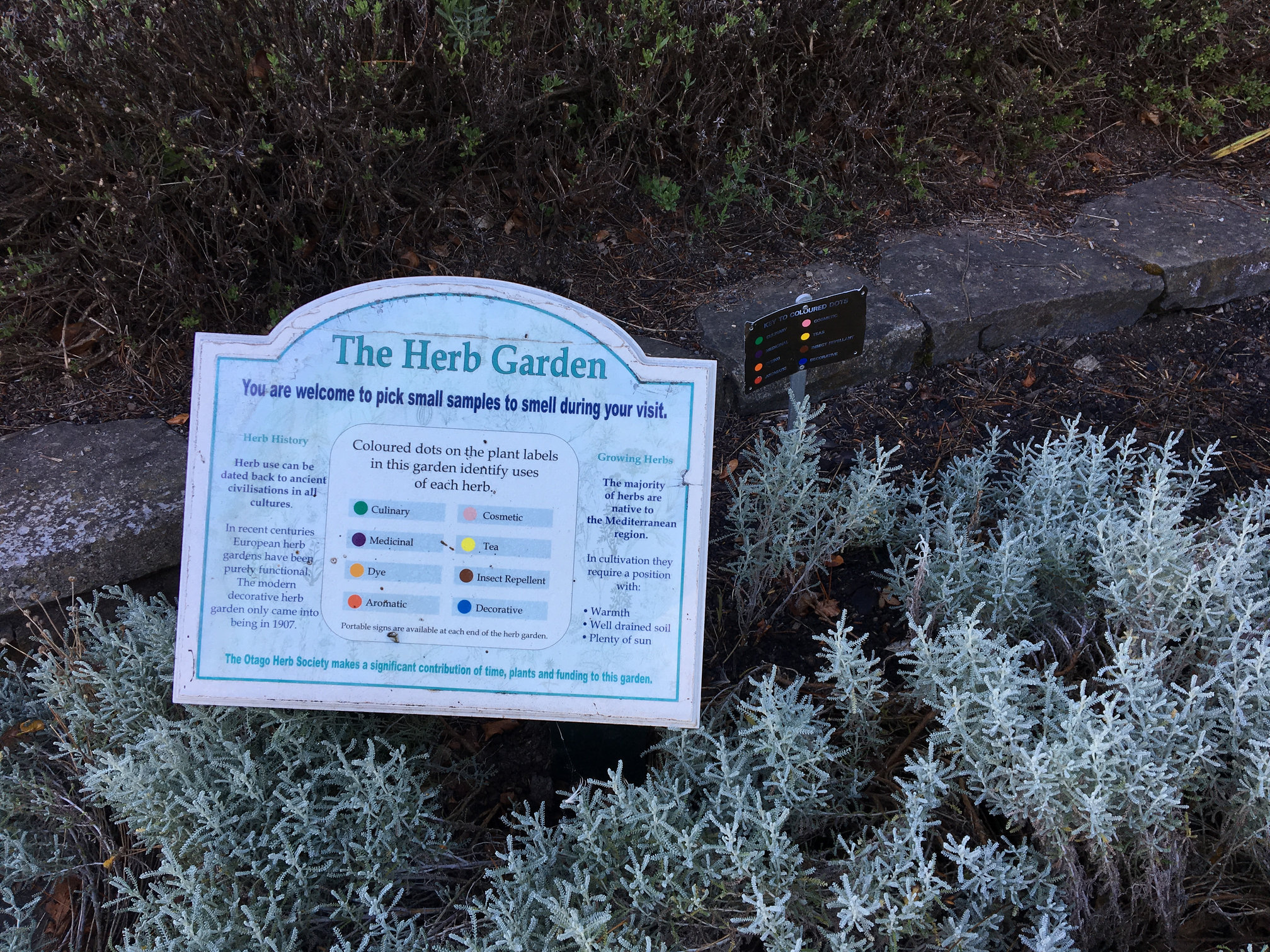
The herb garden in Dunedin Botanic Garden uses coloured dots on the plant labels to indicate each plant's uses.
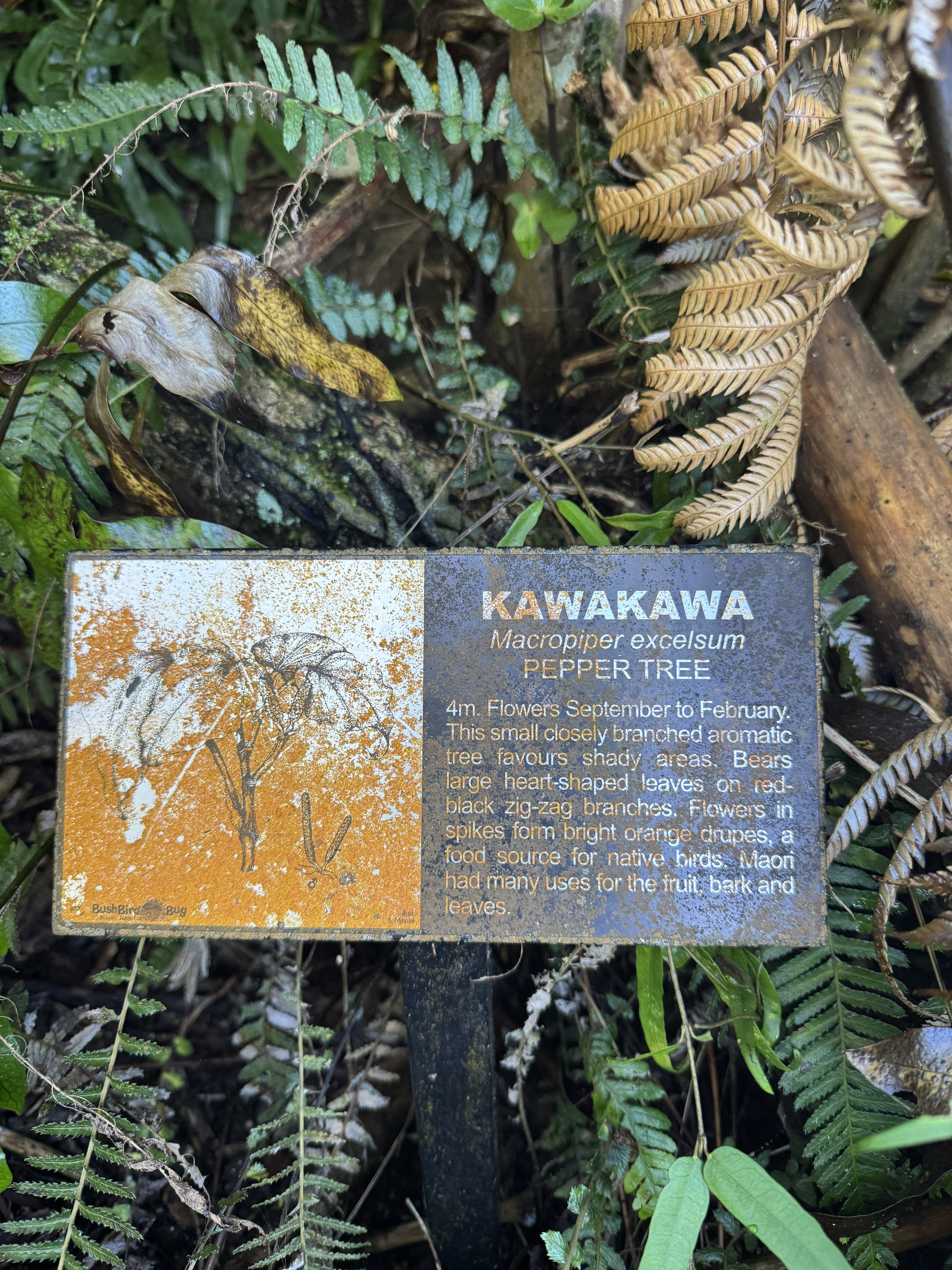
Shade-loving kawakawa was formerly known as Macropiper excelsum. Strangely, no Kawakawa was found near this plant label in Mangemangeroa Reserve, though some could be seen along the trail.
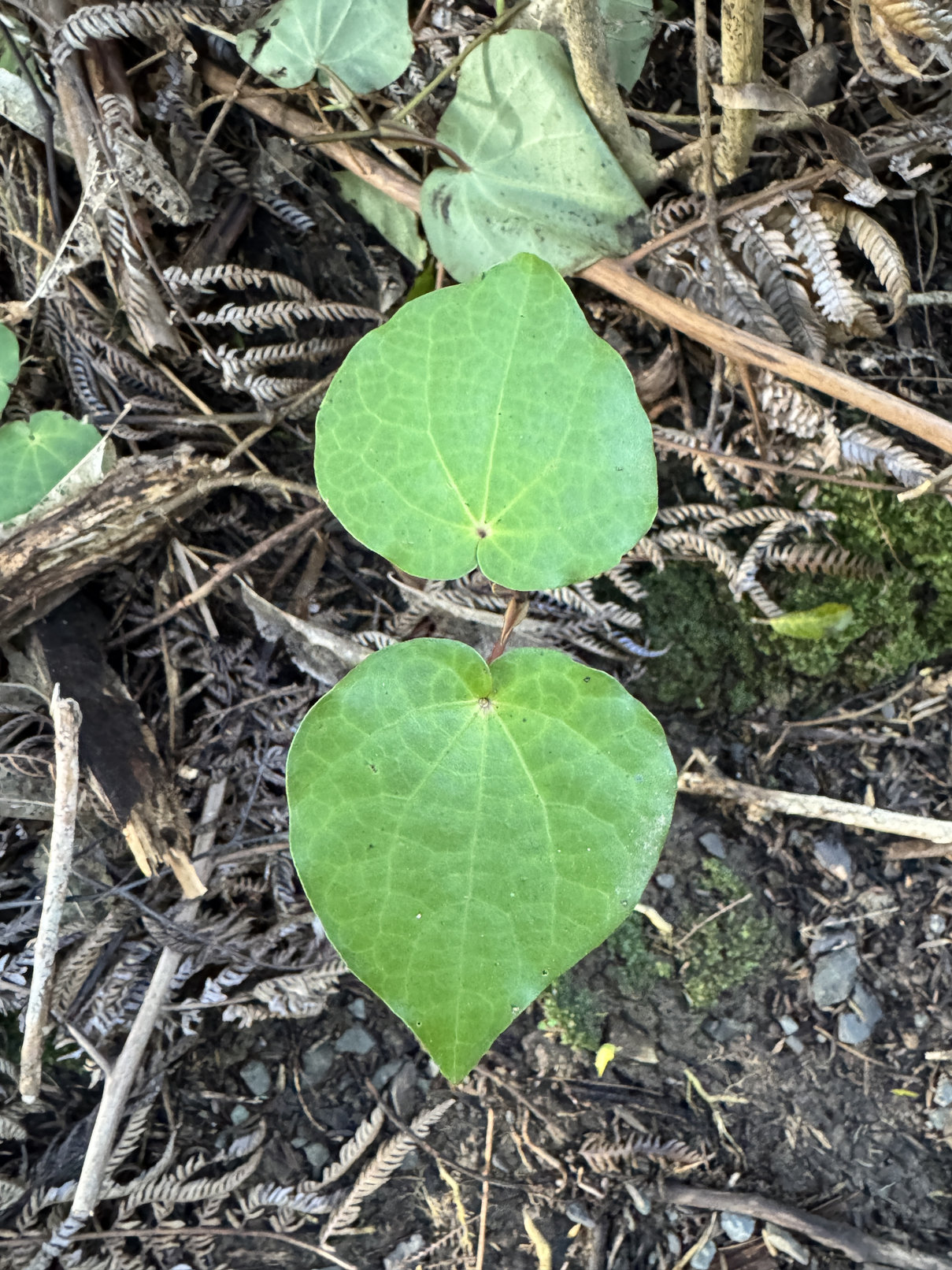
Kawakawa's distinctive heart-shaped leaves
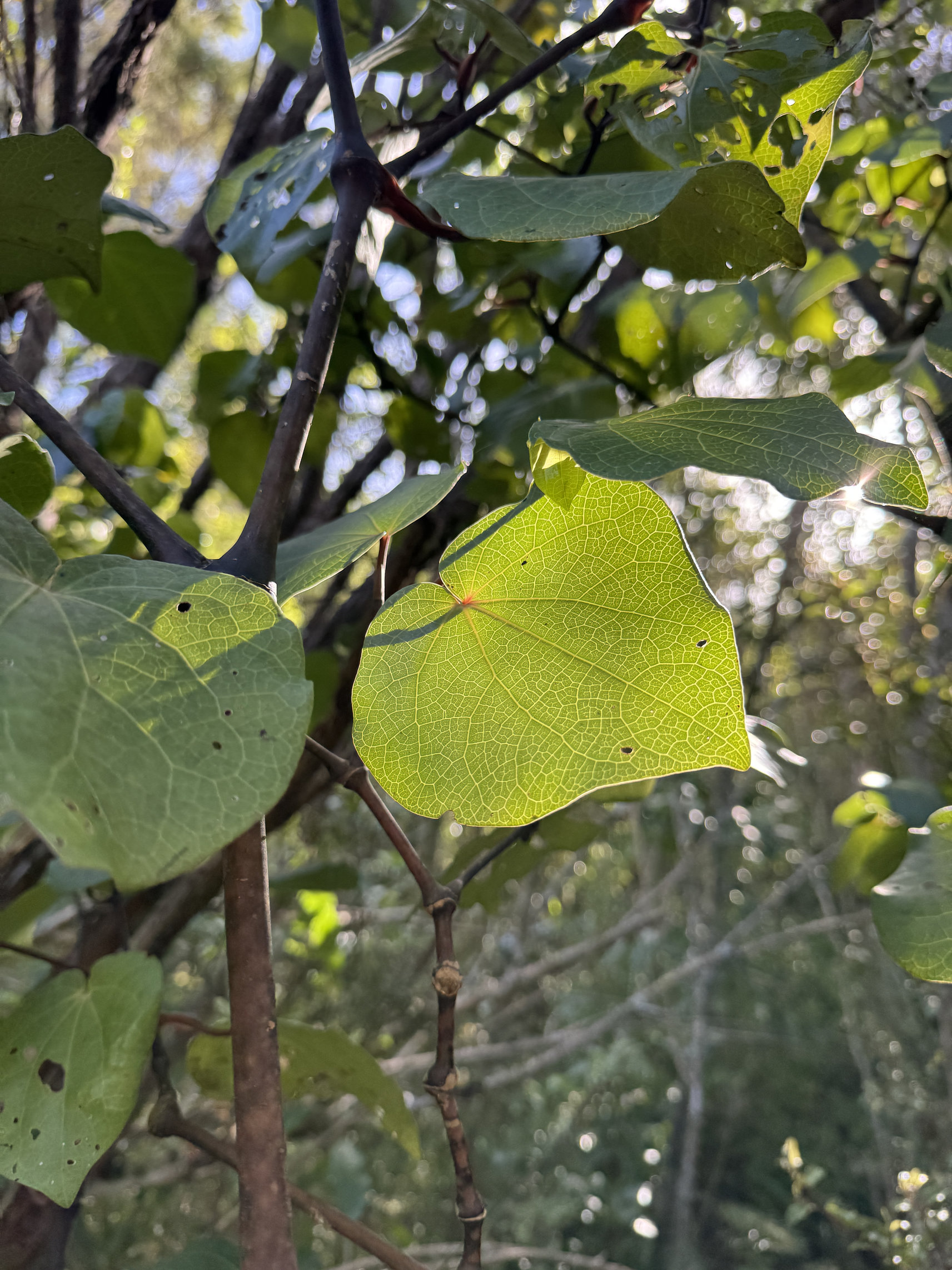
Kawakawa leaves in sunlight